
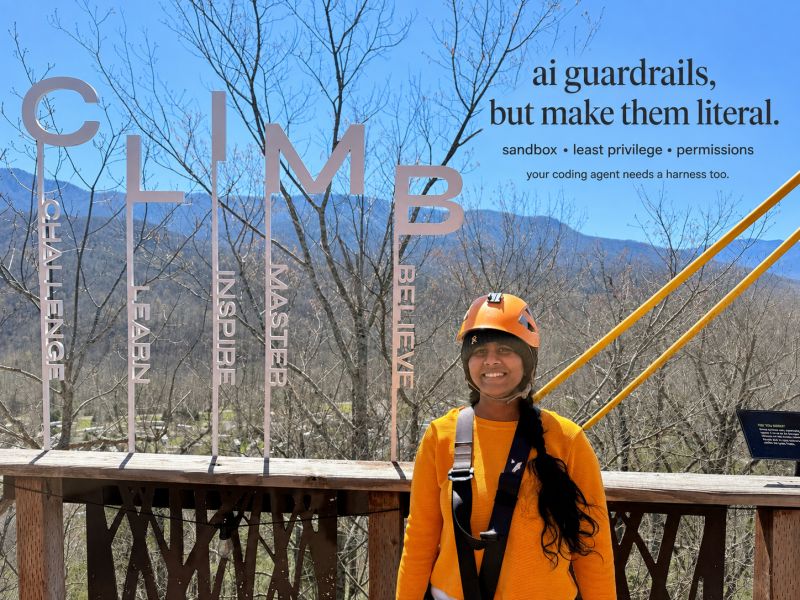
I was ziplining in the Smokies a while ago and could not stop thinking about the instructors. They were calm in a way that made the whole thing feel normal, even though they were sending people through the air for a living.
It was not because they were reckless. It was because the system around them was doing its job: guardrails, helmet, harness, checks, and a setup that made the easy path the safe path. That is exactly how I think about AI agents.
I use agents heavily when I build. They help me move from a messy idea to a prototype faster, explore a codebase, and deal with the boring parts before I can lose momentum. But an agent that can touch a terminal, repo, browser, files, and APIs is not just autocomplete with better manners. It has real leverage.
My default rules are pretty unglamorous: sandbox the agent in a workspace instead of giving it the whole machine; use least privilege; never put secrets, production credentials, or SSH keys in context; treat every README, webpage, and pasted prompt as untrusted input; put an approval boundary before destructive or external actions; and review what the agent did, not only the shiny output it produced.
The point is not to make building with AI slower. It is to make moving fast sustainable. Models getting more capable does not make security engineering less important. It makes the harness more important. Anyway, --dangerously-skip-permissions and I are still not friends.