
AuraRay
A deterministic C++17 ray tracer and reusable Unity package for simulated gaze-aware rendering experiments.
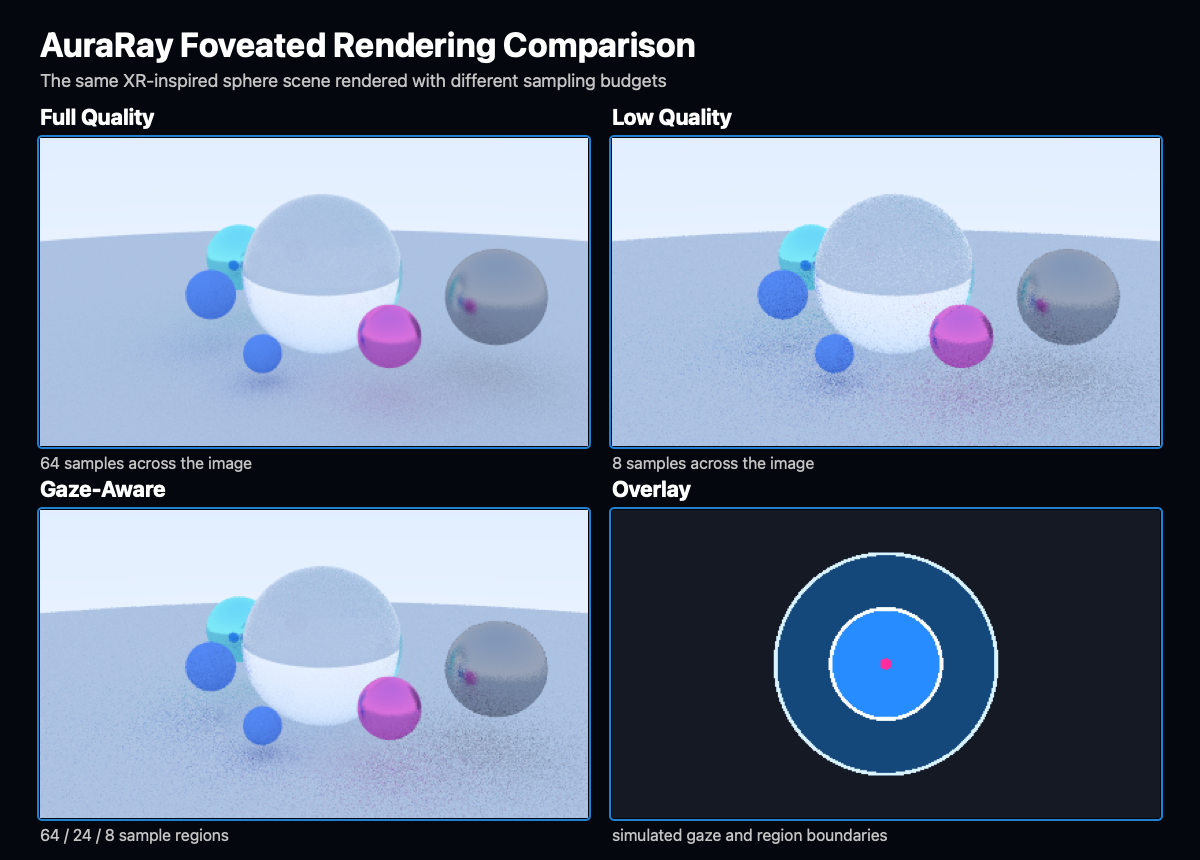
Foveated rendering ideas are hard to inspect when rendering policy, runtime behavior, and visual output are tangled together, especially before eye-tracking hardware is available.
Inside the experience
What someone can actually do
- 11 renders verified by SHA-256 hashes with automated CTest checks
- Lambertian, metal, and dielectric materials with recursive scattering
- Reusable Unity Package Manager package with clean-import verification
- Interactive simulated gaze regions with relative ray-budget estimates
How the idea took shape
Two connected tools: a deterministic C++17 reference renderer with hash-verified outputs, and a reusable Unity package for exploring gaze regions and estimated ray budgets.
“A rendering experiment is easier to trust when reference output and interactive behavior are separated, inspectable, and reproducible.”
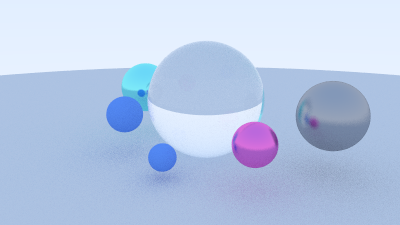
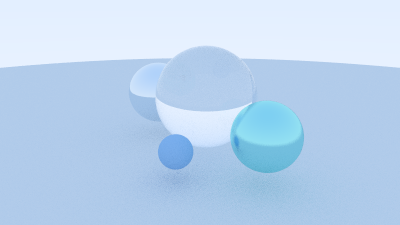
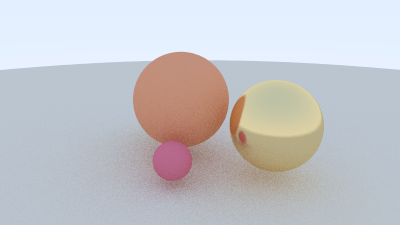
Explore how it was built +
I designed the architecture, wrote the C++ renderer, built the Unity package and simulator, created the verification workflow, and documented the boundary between simulation and hardware behavior.
- C++17
- CMake
- Ray tracing
- Unity 6
- C#
- JSON metadata
Where it could go next